
Key takeaways
- VCA Hospitals suggests a fingernail test: a toy should dent when pressed, and long toys should bend slightly.
- Choose a toy or chew too big to fit entirely in your dog's mouth, and take it away once it is small enough to swallow whole.
- Supervise every session, and discard toys that are cracked, frayed or broken.
- Ask your vet about hard chews, because veterinary sources differ on nylon and similar materials.
The fingernail test and what to avoid
VCA Hospitals advises pressing a fingernail into a toy: if it does not dent, it may be too hard, and long toys should bend slightly. VCA says bones, cow hooves, hard rawhide and large ice cubes can chip or fracture teeth, and that toys with parts that can be pulled off or that can be shredded quickly are a swallowing risk.
The AKC adds that many vets recommend avoiding antlers because they can break teeth or splinter. By these tests, very hard chews fail. Some brands sell nylon chews for power chewers and say they are built to give way before teeth, and vets differ on them, so ask your own vet about your dog's age, teeth and chewing style.
Size and supervision
Both VCA and the AKC advise choosing a toy or chew too big to swallow whole. As a chew wears down, the last piece becomes a hazard, so take it away. The AKC notes that bully sticks are single-ingredient, digest easily and do not splinter, but a power chewer can bite off large pieces, and a holder can help with the last piece.
- Stay with your dog during every chew session.
- Check the weight range on the label and choose the next size up if you are unsure.
- Take chews away when they are small enough to swallow whole.
- Count edible chews in your dog's daily calories, and ask your vet if your dog has digestive or weight concerns.
Match the toy to the chewer
Gentle chewers and puppies may suit soft rubber balls and plush toys under supervision. Strong chewers need something sturdier, and you should keep the fingernail test and your vet's advice in mind. Treat-dispensing toys and lick mats add enrichment without relying on hard chewing.
When to throw a toy away
VCA says to discard toys when stuffing shows, rope is frayed or rubber is broken. Replace a toy as soon as it is damaged, whatever the price.
Products that help.
- Best Dog Toys18 picks we recommend
- Best Dog Chews11 picks we recommend
- Best Lick Mats & Slow Feeders11 picks we recommend
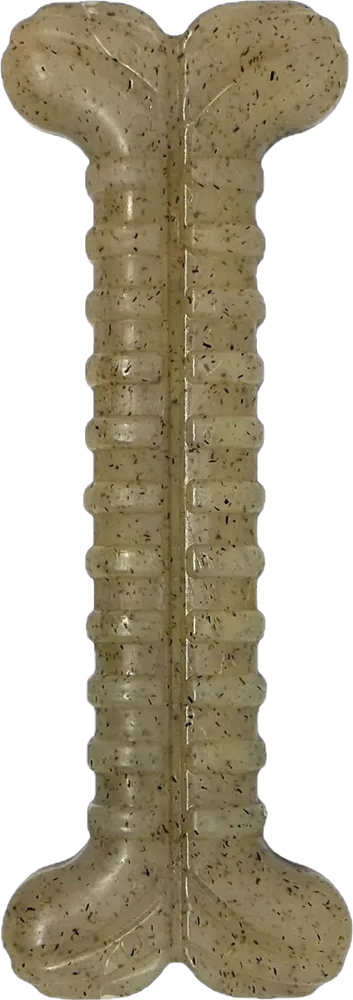
SodaPup Tough Bone Nylon Chew
A bone-shaped nylon chew for strong chewers
We recommend the SodaPup Tough Bone as a classic, long-lasting nylon chew for medium and large dogs: lightweight to carry, easy-grip ends and top-rack dishwasher cleaning.
- Power chewers
- Medium and large dogs
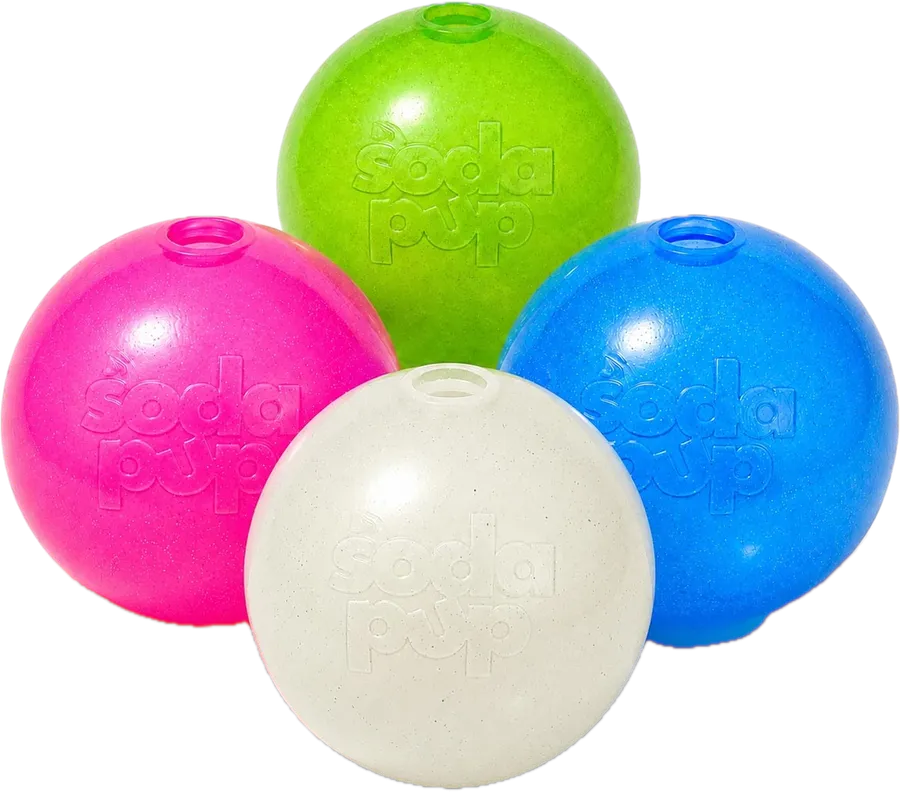
SodaPup Glitter Ball Floating Fetch Toy
A soft floating fetch ball with a treat hole
We recommend the SodaPup Glitter Ball as a gentle fetch toy for puppies, seniors and moderate chewers: ultra-soft rubber, a hollow treat design, launcher-compatible size and four colors including glow in the dark.
- Fetch and water play
- Puppies and seniors
Questions, answered
How can I tell if a chew is too hard?
VCA Hospitals suggests the fingernail test: press a fingernail into the toy, and if it does not dent it may be too hard. Long toys should bend slightly.
Are nylon chews safe?
Veterinary sources differ. VCA's fingernail test would class hard nylon as too firm, while brands market nylon for power chewers. Ask your vet and supervise closely.
What size chew should I choose?
One too large to fit entirely in your dog's mouth. Take it away when it becomes small enough to swallow whole.
Sources
We base our care guides on guidance from veterinary schools, veterinary associations and animal welfare organizations, written in our own words. If your pet is unwell, your vet is the right first call.