
Key takeaways
- Choose by how your cat scratches: vertical, horizontal or angled, and on which surface.
- A post should be tall enough for a full stretch and sturdy enough not to shift or tip.
- Put it where your cat already scratches or sleeps, then add more in other rooms.
- A tree adds height and rest spots, but it only protects furniture if it has scratching surfaces your cat likes.
Start by watching your cat
The ASPCA notes that cats differ in whether they prefer horizontal, vertical or slanted surfaces, and in what material they like. Watch where and how your cat scratches now. A cat who stretches up the sofa arm wants a tall vertical post. A cat who rakes the rug may prefer a flat or angled scratcher, such as a lounger-style scratching bed.
Height, stability and texture
VCA Hospitals advises a post tall enough for your cat to stretch fully on the hind legs, and sturdy enough that it will not tip when scratched. The ASPCA adds that all cats want a post that will not shift or collapse. A wobbly tree teaches a cat not to use it.
Texture matters too. VCA notes many cats prefer a loosely woven material they can hook their claws into, and some like sisal or bare wood. Cornell's Feline Health Center suggests matching the surface to what your cat already likes to scratch.
- Check the overall height against your cat's full stretch, not just the post.
- Look for a wide, heavy base, and place tall trees against a wall.
- Check weight limits when a listing gives them, and be cautious where none is stated.
- Choose sisal, cardboard or carpet to match your cat's habit.
Where to put it
VCA suggests putting a post in a prominent spot, with at least one near where your cat sleeps, and starting where your cat already scratches. The ASPCA suggests placing posts near furniture you want to protect so they serve as alternatives. Once your cat uses it, you can add posts in other rooms.
Trees, posts and scratching beds
A single post is simple and compact. A cat tree adds platforms, hideaways and height, which many cats enjoy, but only the scratching surfaces protect your furniture. A flat or angled scratcher adds a different surface for cats who rake. Many homes use a tree plus one or two scratchers near the furniture a cat targets.
Products that help.
- Best Cat Trees and Scratchers10 picks we recommend
- Best Cat Essentials15 picks we recommend
- Best Catios and Outdoor Cat Houses5 picks we recommend
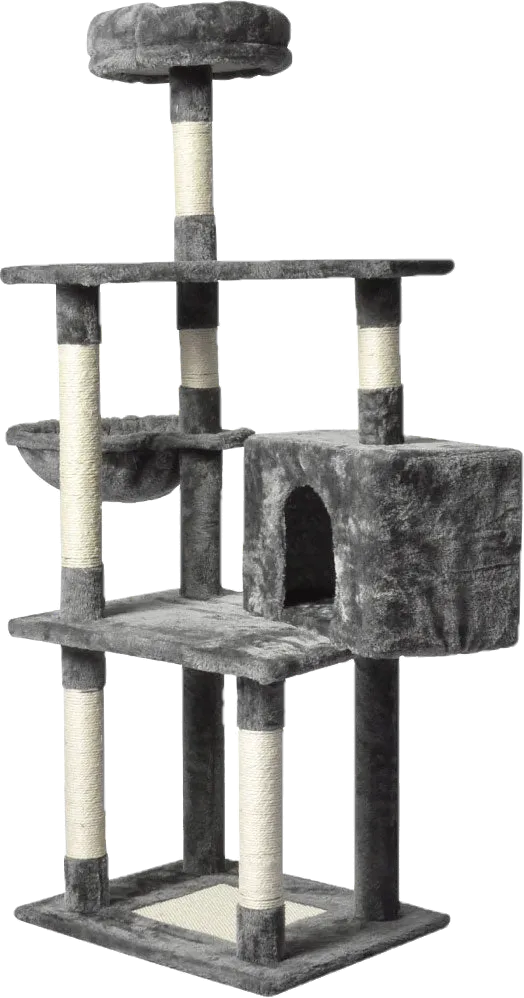
Floofy Pets Pawz 130cm Cat Tree
A tall grey tree with sisal posts and a cubby
We recommend the Pawz 130cm Cat Tree for cats who love height: a tall, multi-level tree that combines scratching, perching, climbing and sleeping in one piece, with a footprint that fits a living room corner.
- Climbers and jumpers
- Multi-level play
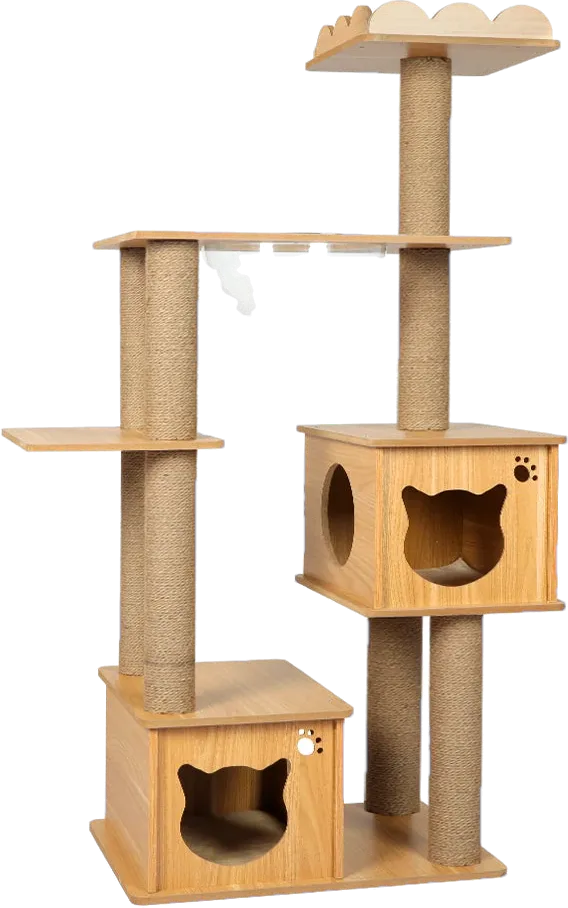
Floofy Pets Pawz 138cm Cat Tree with Wall Attachment (Greige)
A 138 cm wooden-look tree with a den and a wall attachment
We recommend the Pawz 138cm Cat Tree for owners who want a more stable tree: multi-level platforms, sisal-wrapped posts, a sleeping den, a detachable transparent bowl and a wall attachment, on a 60 × 40 cm base.
- Larger rooms
- Wall-fixed stability
Questions, answered
How tall should a scratching post be?
Tall enough for your cat to stretch fully on the hind legs, according to VCA Hospitals and the ASPCA, and sturdy enough not to tip.
Why does my cat ignore the new cat tree?
The surface, shape or position may not suit your cat. Place it where your cat already scratches, check that it is stable and try a different material.
Do cat trees stop furniture scratching?
Only if your cat likes the scratching surfaces and uses them. Put scratchers next to the furniture your cat targets and reward use.
Sources
We base our care guides on guidance from veterinary schools, veterinary associations and animal welfare organizations, written in our own words. If your pet is unwell, your vet is the right first call.