
Key takeaways
- Dogs pull because pulling works: it gets them where they want to go. Make a slack leash the only thing that moves you forward.
- Reward your dog for being at your side, often and generously, especially at first.
- A front-clip harness gives you more control while you train, but training is what changes the habit.
Why dogs pull
Most dogs walk faster than we do and the world is full of smells. If pulling gets them to the next lamppost, they learn to pull. The fix is to change what pays off: forward movement and rewards happen only when the leash is loose.
Veterinary behaviorists recommend reward-based training for every skill, including leash manners. Yanking, choking or shocking a dog isn't needed and can make walks more stressful.
The method, step by step
- Start indoors or in the garden with few distractions. Hold treats in the hand on the side you want your dog to walk.
- Each time your dog is beside you with a slack leash, mark it with a word like "yes" and give a treat at your leg.
- Add a cue such as "let's go" and take a few steps. Reward often for staying close.
- On walks, the moment the leash goes tight, stop and stand still. When your dog comes back and the leash slackens, praise and walk on.
- If your dog keeps pulling toward something, turn and walk the other way, then reward when they catch up beside you.
- Increase difficulty slowly: quiet streets first, then busier places with other dogs and people.
The right gear helps
A well-fitted harness with a front clip turns your dog slightly toward you when they lean into the leash, which makes practice calmer. Clip to the back once your dog walks nicely. Avoid gear that works by causing pain.
A standard six-foot leash is ideal for training. Save hands-free leashes for when your dog already walks reasonably calmly.
When to get help
If your dog lunges, barks or panics at other dogs or people, that's usually fear or frustration rather than simple pulling. A qualified reward-based trainer or veterinary behaviorist can help.
Products that help.
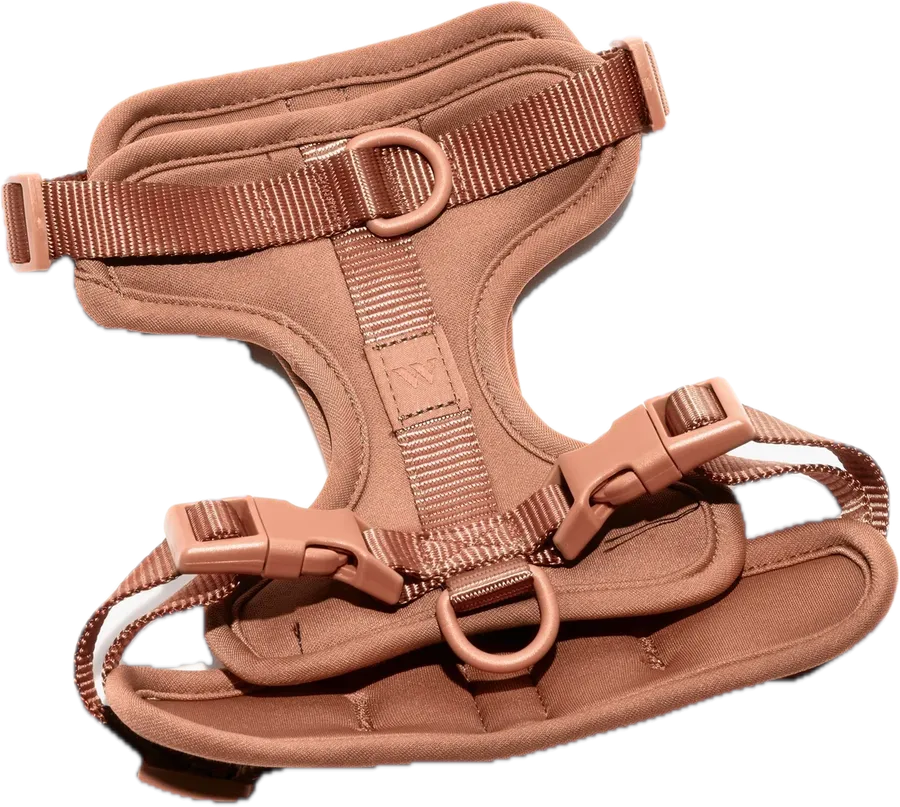
Wild One Cushioned Dog Harness
Wild One's most adjustable harness
We recommend the Wild One Cushioned Dog Harness as a comfortable everyday harness that adapts to how your dog walks: front clip for pullers, two back clips for relaxed walkers, and four sizes from XS to L.
- All-day comfort
- Three leash clip options
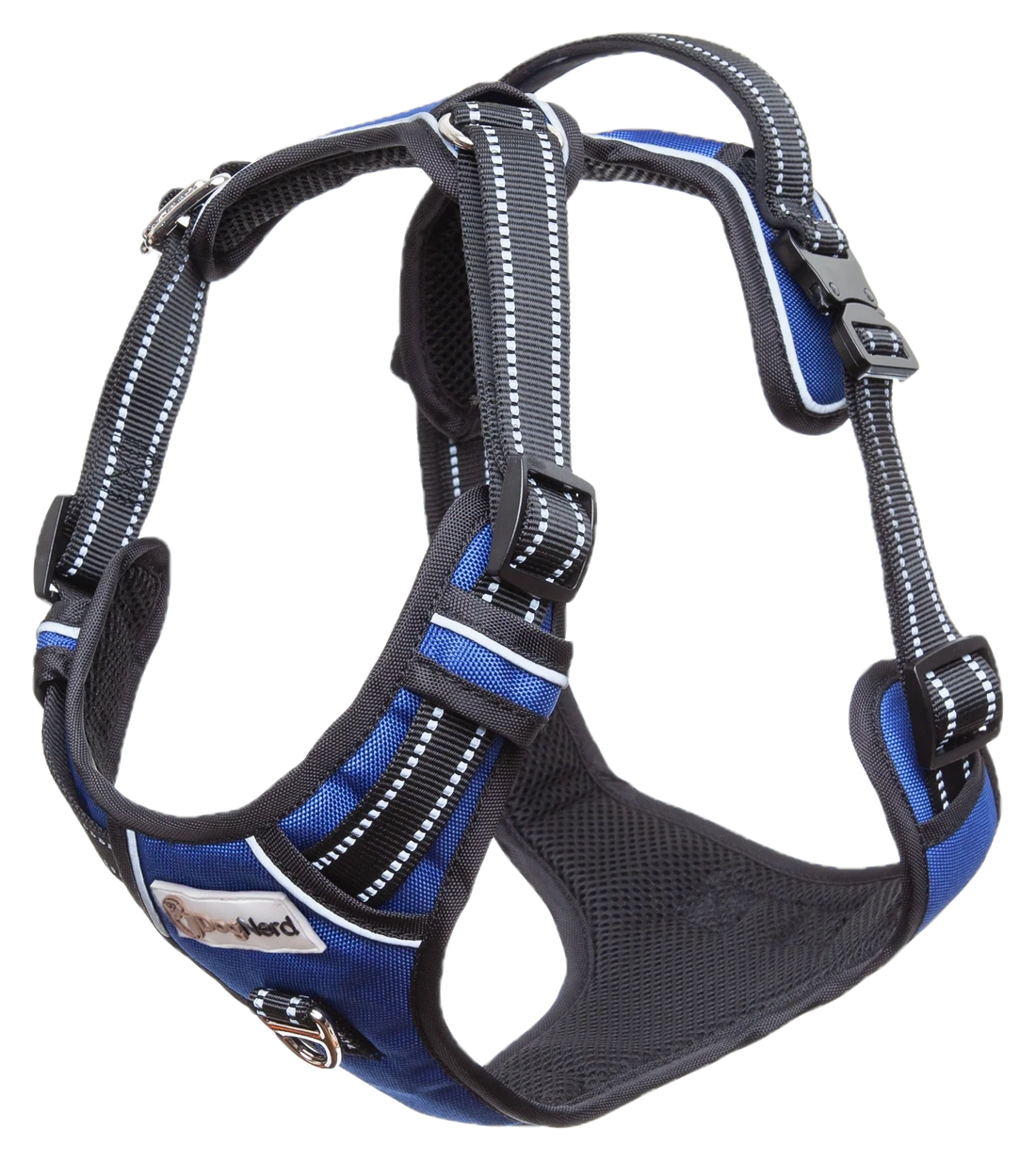
DogNerd No-Pull Harness - Large
A padded, reflective harness in DogNerd's large size
DogNerd's Large harness is listed for a 27–32 in chest girth, a 28 in neck and dogs weighing 50–90 lb. Measure your dog before ordering; the weight range and breed list are starting points, not a fit guarantee.
- Dogs whose chest measures 27–32 in and neck measures about 28 in
- Owners comparing a front-clip harness for a large dog
Questions, answered
How long does it take to teach loose-leash walking?
Most dogs improve within a few weeks of daily practice, but busy environments take longer. Consistency matters more than session length.
Is a harness or collar better for a dog that pulls?
A harness is usually more comfortable and spreads pressure across the chest. A front-clip harness adds steering while you train.
What treats should I use?
Small, soft, high-value treats your dog loves. Count them as part of the daily food allowance.
Sources
We base our care guides on guidance from veterinary schools, veterinary associations and animal welfare organizations, written in our own words. If your pet is unwell, your vet is the right first call.